News
What seems complex today will become tomorrow’s standard
Many of the capabilities that still feel innovative today — automated detections, predictive analytics, remote monitoring — are steadily becoming the new normal in industrial operations. Behind this evolution are teams who test, refine and test again. Teams who navigate technical uncertainty with one clear conviction: technology only makes sense when it enables better decision-making. To better understand how this process unfolds, we spoke with members of Uali’s technology team.
Technology designed for operational environments
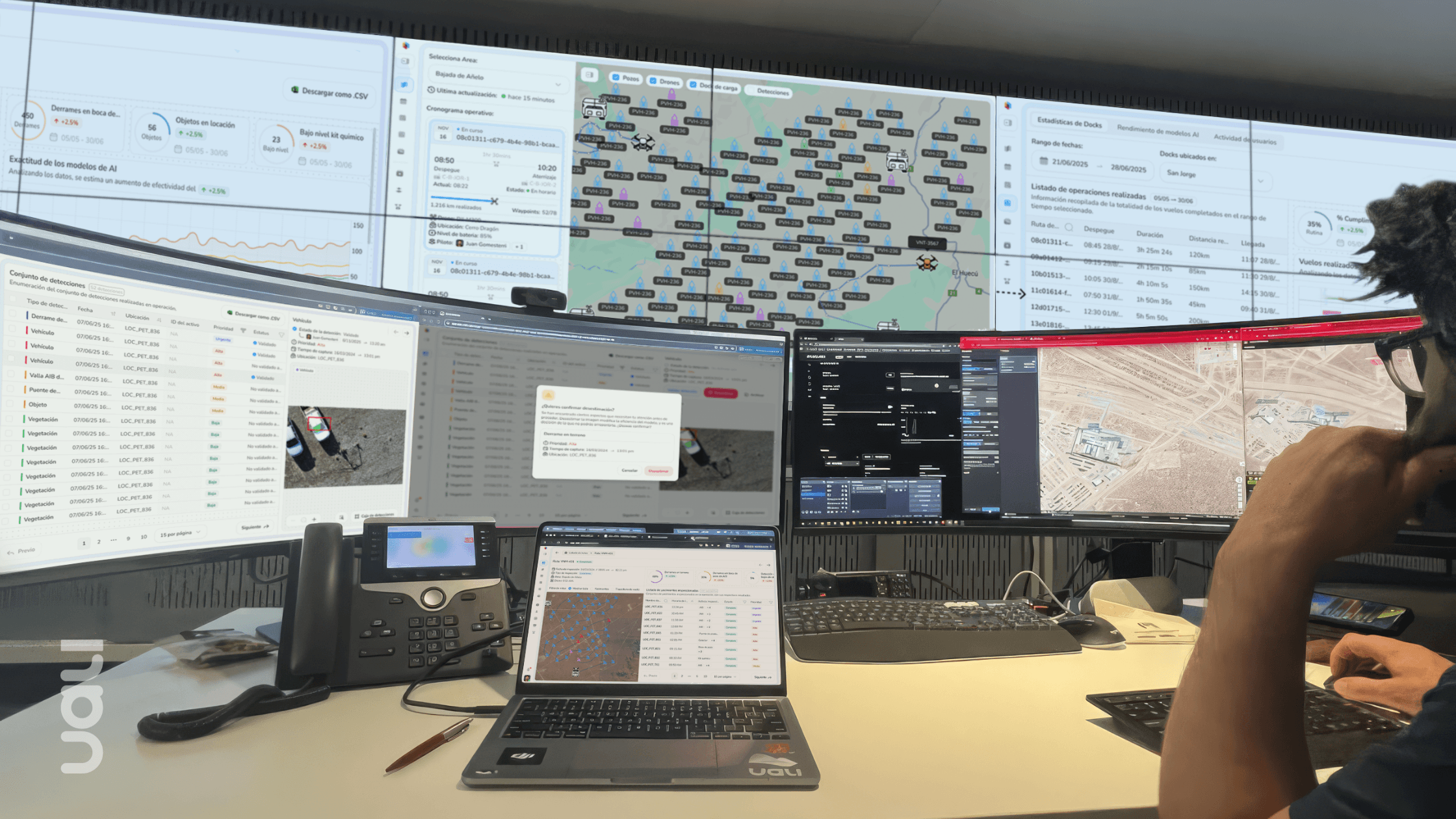
Developing technology is one challenge. Making it work reliably in real-world operations is an entirely different one. This evolution is about building tools that can be confidently used by those responsible for daily operations. Much of that technological work happens behind the scenes.
“What appears to the user as a clear alert or prioritised detection actually involves trained models, constant validation processes and large volumes of processed data.” — David Choi, Tech Lead.
The balance between technical sophistication and a seamless user experience defines much of a platform’s value. It is not about showcasing everything technology can do, but about ensuring it works naturally within operational workflows.
“Our goal is not for users to understand all the complexity, but to have clarity to act.” — Blas Bogado, UX Designer.
→ Learn more about our work in energy in “Learning to operate energy more efficiently”
Prepared for what comes next
Every industry reaches a point when certain technologies shift from being innovative to becoming expected. It happened with cloud computing. It happened with advanced analytics.
In the energy industry, that shift is already underway. Automated monitoring and the use of artificial intelligence to support operational decision-making are consolidating as part of everyday operations.
“Many of these capabilities will soon stop being differentiators. They will become the standard.” — Amelia Bálsamo, CTO at Uali
More than a trend, this represents a structural transformation in how assets, risks and resources are managed. Flexible architectures, self-learning models, scalable platforms that grow without compromising stability — these are technical decisions that often remain invisible, yet they sustain long-term evolution.
Each improvement, each trained model and each automation brings operations closer to a future where processes are more anticipatory than reactive. And throughout that journey, one truth becomes clear: what seems complex today will eventually feel natural. Not because it is simple, but because there are dedicated teams making it possible.
Ian Bogado
CEO